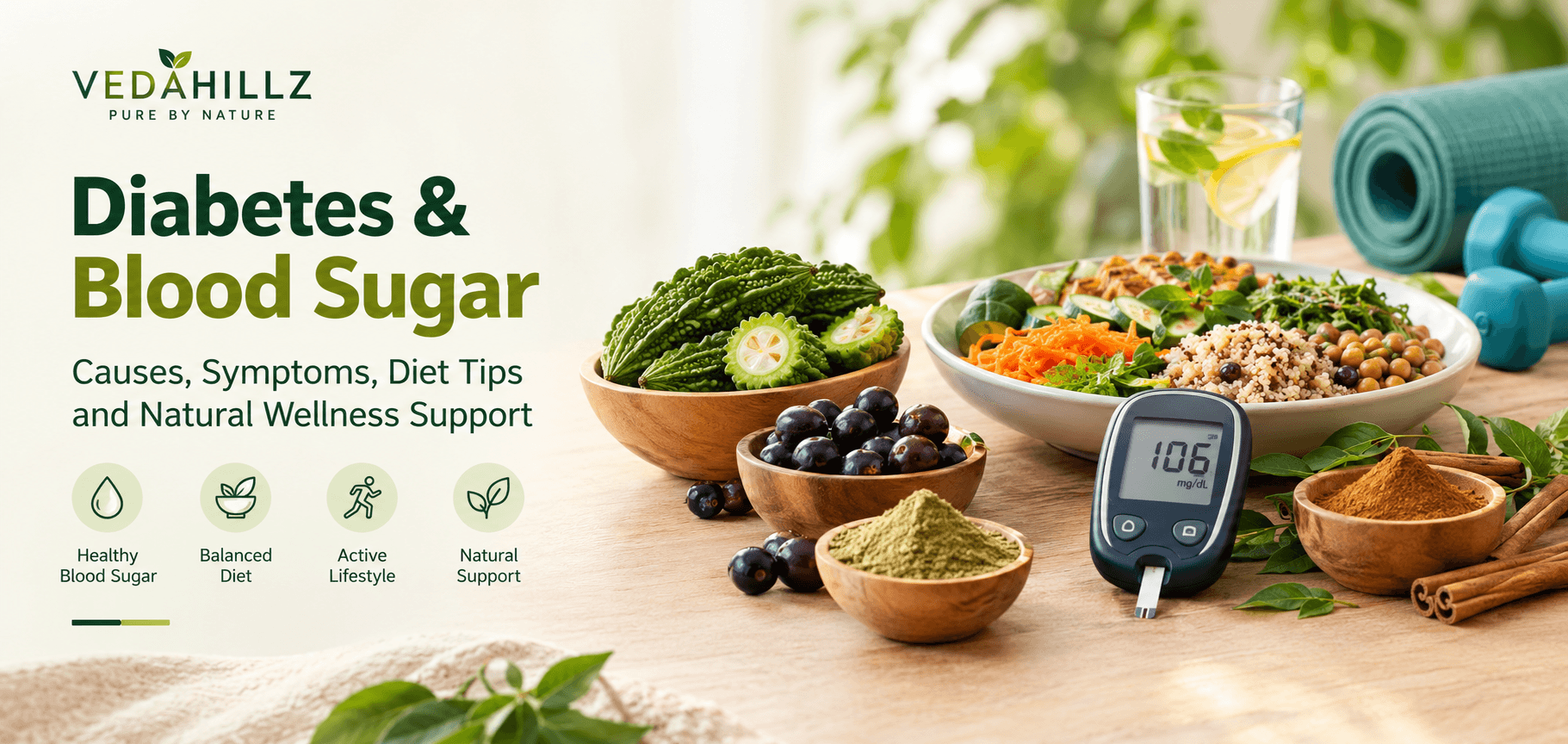
Maintaining healthy blood sugar levels is an important part of overall health. However, busy schedules, irregular eating habits, limited physical activity and other lifestyle factors can make it harder to maintain healthy routines.
Diabetes is a long-term health condition that affects how the body regulates blood glucose, commonly called blood sugar. Glucose provides energy to the body, while the hormone insulin helps glucose move from the bloodstream into cells. When the body does not produce enough insulin or cannot use it effectively, blood sugar levels can become too high.
The good news is that appropriate medical care, balanced nutrition, regular physical activity and consistent monitoring can help people manage diabetes and reduce the risk of complications.
In this guide, we will explore the common symptoms of diabetes, factors that affect blood sugar, practical dietary habits and how natural ingredients can fit into a balanced wellness routine.
Blood sugar refers to the amount of glucose present in your bloodstream. Your body obtains glucose mainly from carbohydrates in foods such as rice, roti, bread, fruits, milk and other carbohydrate-containing foods.
After eating, blood glucose levels usually rise. Insulin helps the body use or store that glucose. In people with diabetes, this process does not work properly, resulting in elevated blood sugar.
The main types of diabetes include:
Type 1 diabetes: The body produces little or no insulin because the immune system damages the insulin-producing cells. Insulin treatment is essential.
Type 2 diabetes: The body does not use insulin effectively and may eventually produce insufficient insulin. Lifestyle measures and medication may both be needed.
Gestational diabetes: Diabetes diagnosed during pregnancy that requires appropriate monitoring and medical care.
Understanding your type of diabetes is important because treatment and management can differ from person to person.
High blood sugar does not always cause noticeable symptoms, particularly in the early stages. When symptoms occur, they may include:
Feeling unusually thirsty
Urinating more frequently than usual
Feeling tired or low on energy
Experiencing blurred vision
Feeling hungrier than usual
Losing weight without an obvious reason
Cuts or wounds taking longer to heal
These symptoms can have other causes, too. If you notice them, consult a qualified healthcare professional and ask whether blood glucose testing is appropriate.
A blood glucose test or HbA1c test can help identify diabetes. The HbA1c test reflects average blood glucose levels over approximately the previous two to three months.
Blood glucose levels can change throughout the day. Several factors may influence them.
Foods containing carbohydrates can raise blood sugar. The amount eaten, the type of food and what you eat alongside it can all influence the response.
For example, a meal containing vegetables, dal, whole grains and a suitable protein source provides a different nutritional balance from a meal consisting mainly of refined carbohydrates and sugary drinks.
Muscles use glucose for energy during physical activity. Regular movement can support blood glucose management and overall cardiovascular health.
Walking, cycling, swimming, strength exercises and other activities suited to your abilities can be helpful.
Poor sleep and ongoing stress can affect hormones, appetite and everyday health habits. Maintaining a consistent sleep routine and finding practical ways to manage stress may support overall well-being.
Some medicines, illnesses and hormonal changes can affect blood glucose. Follow your prescribed treatment plan and discuss unexpected readings with your healthcare professional rather than changing medication yourself.
A balanced diet does not have to be complicated or expensive. Everyday Indian foods can be part of a diabetes-friendly eating pattern when portions and overall nutritional balance are considered.
Try to include a variety of vegetables, protein-rich foods and fibre-containing carbohydrates in your meals.
Examples include:
Roti with dal and cooked vegetables
Vegetable-rich dalia with plain curd
Brown rice or an appropriate portion of regular rice with rajma and salad
Besan chilla with vegetables
Eggs, tofu, paneer or other suitable protein sources alongside vegetables
Your ideal portions depend on your nutritional needs, medicines, activity level and blood glucose targets.
Fibre is found in foods such as vegetables, beans, lentils, whole grains, nuts and seeds. Including a variety of fibre-rich foods can support digestive health and help make meals more satisfying.
Chia seeds and flax seeds can be included in meals if they suit your dietary needs. Remember that seeds are nutritious foods, not treatments for diabetes.
Sweetened tea, soft drinks, packaged juices and energy drinks can contribute significant amounts of sugar.
Consider water, unsweetened drinks or other suitable alternatives. If you enjoy tea or coffee, gradually reducing the amount of added sugar can be a practical first step.
Even nutritious foods can affect blood sugar when eaten in large amounts. Instead of completely avoiding all carbohydrates, focus on portion awareness, food variety and consistency.
A registered dietitian can help you plan meals around your usual Indian diet, food preferences and treatment requirements.
Regular meals may help some people maintain a more predictable routine. However, meal timing should be personalised, particularly if you take insulin or medicines that can cause low blood sugar.
Avoid skipping meals without understanding how it may affect your treatment.
Diet is only one part of diabetes care. Everyday habits also matter.
Stay physically active: Aim to build a routine that fits your current fitness level. Many adults can work towards at least 150 minutes of moderate-intensity physical activity each week, as advised by the World Health Organization. Start gradually if you are inactive or have other health concerns.
Maintain a consistent sleep schedule: Try to go to bed and wake up at similar times. A comfortable sleeping environment and a relaxing bedtime routine can help.
Monitor blood glucose as advised: Your doctor may recommend home glucose checks, HbA1c testing or other monitoring based on your treatment plan.
Attend regular health check-ups: Diabetes care may include monitoring blood pressure, cholesterol, kidney function, eye health and foot health.
Avoid tobacco: Not smoking is an important step towards reducing cardiovascular and other health risks.
Small, consistent changes are generally more sustainable than attempting to change every habit at once.
Traditional wellness practices include several herbs and plant-based ingredients that are often discussed in relation to blood sugar. These include bitter gourd (karela), jamun, gudmar, neem and cinnamon.
However, traditional use does not automatically establish that an ingredient effectively treats diabetes. Research quality, dosage, product formulation and individual health conditions all matter.
Here is what to keep in mind about commonly discussed ingredients.
Karela is a familiar ingredient in Indian cooking and is traditionally used in various wellness practices. Researchers have studied bitter gourd for its possible effects on glucose metabolism, but the evidence is not strong enough to consider it a replacement for established diabetes treatment. Buy Karela Powder
Jamun fruit and its seeds have a history of use in traditional Indian wellness practices. Claims about jamun powder and blood sugar should be interpreted carefully because reliable evidence for specific products and doses remains limited. Buy Jamun Powder
Gudmar, also known as Gymnema sylvestre, is traditionally associated with blood sugar wellness. Some preliminary research has explored its effects, but more high-quality evidence is needed to establish its safety and effectiveness for diabetes management. Buy Gudmar Powder
Neem is used in traditional practices for several purposes. It should not be assumed that neem powder can control diabetes or safely replace medication. Its suitability can depend on the formulation, dose and individual circumstances. Buy Neem Powder
Cinnamon is a common culinary spice that can add flavour to food without requiring extra sugar. Although it has been studied for possible effects on blood glucose, the evidence is mixed, and it is not a substitute for prescribed diabetes care. Large amounts of some cinnamon varieties may also pose risks, particularly with long-term use. Buy Cinnamon Powder
Vedahillz offers products such as Karela Powder, Jamun Powder, Gudmar Powder, Neem Powder, Cinnamon Powder and herbal combinations. If you are exploring these ingredients, read the product label and consult your healthcare professional before using them for a health-related purpose.
Herbal products can interact with medicines or contribute to low blood sugar in some circumstances. Ask your doctor or pharmacist whether a specific product is suitable for you, especially if you take insulin or diabetes medication.
Important: Do not stop, reduce or replace prescribed medication with herbal powders, supplements or home remedies without medical guidance.
Speak with a healthcare professional if you experience symptoms of diabetes, receive unusual blood glucose readings or have concerns about your existing treatment.
Seek urgent medical care if you experience severe weakness, confusion, fainting, difficulty breathing, persistent vomiting or other serious symptoms. These may indicate a medical emergency, particularly in someone with diabetes.
If you have diabetes, follow the monitoring schedule recommended by your clinician and discuss any new supplement before adding it to your routine.
High blood sugar means the glucose level in your blood is elevated. Diabetes is a condition in which blood glucose regulation is impaired. High readings can occur for different reasons, so appropriate testing and medical assessment are important.
Vegetables, pulses, beans, whole grains, suitable protein sources, nuts and seeds can all fit into a balanced eating pattern. The right portions and combinations depend on your individual needs and treatment plan.
No herbal powder should be considered a proven cure for diabetes. Ingredients such as karela, jamun, gudmar and cinnamon have been studied to varying degrees, but the evidence does not support replacing standard treatment with these products.
Cinnamon is a useful culinary spice, but evidence about its effects on blood glucose remains inconsistent. Use it as part of your normal diet rather than as a substitute for medication.
Many people with diabetes can eat whole fruit as part of a balanced diet. Portion size, the type of fruit, the overall meal and individual glucose responses matter. Whole fruit is generally preferable to juice because it retains its fibre.
A healthcare professional may recommend a blood glucose meter, continuous glucose monitoring or periodic HbA1c testing. The right approach and testing frequency depend on your type of diabetes and treatment.
Suitability depends on the particular product, its ingredients, your medical conditions and any medicines you take. Check the label and speak with your healthcare professional before use. These products should not replace prescribed treatment.
Managing diabetes and blood sugar involves more than avoiding sweets. Balanced meals, appropriate portions, regular movement, adequate sleep, medical monitoring and a personalised treatment plan all play important roles.
Natural ingredients such as karela, jamun, gudmar, neem and cinnamon are part of traditional wellness practices, but their benefits should not be overstated. Choose products carefully, discuss supplements with your healthcare professional and continue your prescribed care.
At Vedahillz, exploring natural ingredients can be one way to learn more about traditional wellness—but informed choices and evidence-based diabetes care should always come first.
Medical disclaimer: This article is for general educational purposes only and is not a substitute for professional medical advice, diagnosis or treatment. If you have diabetes or suspect that you may have it, consult a qualified healthcare professional.


