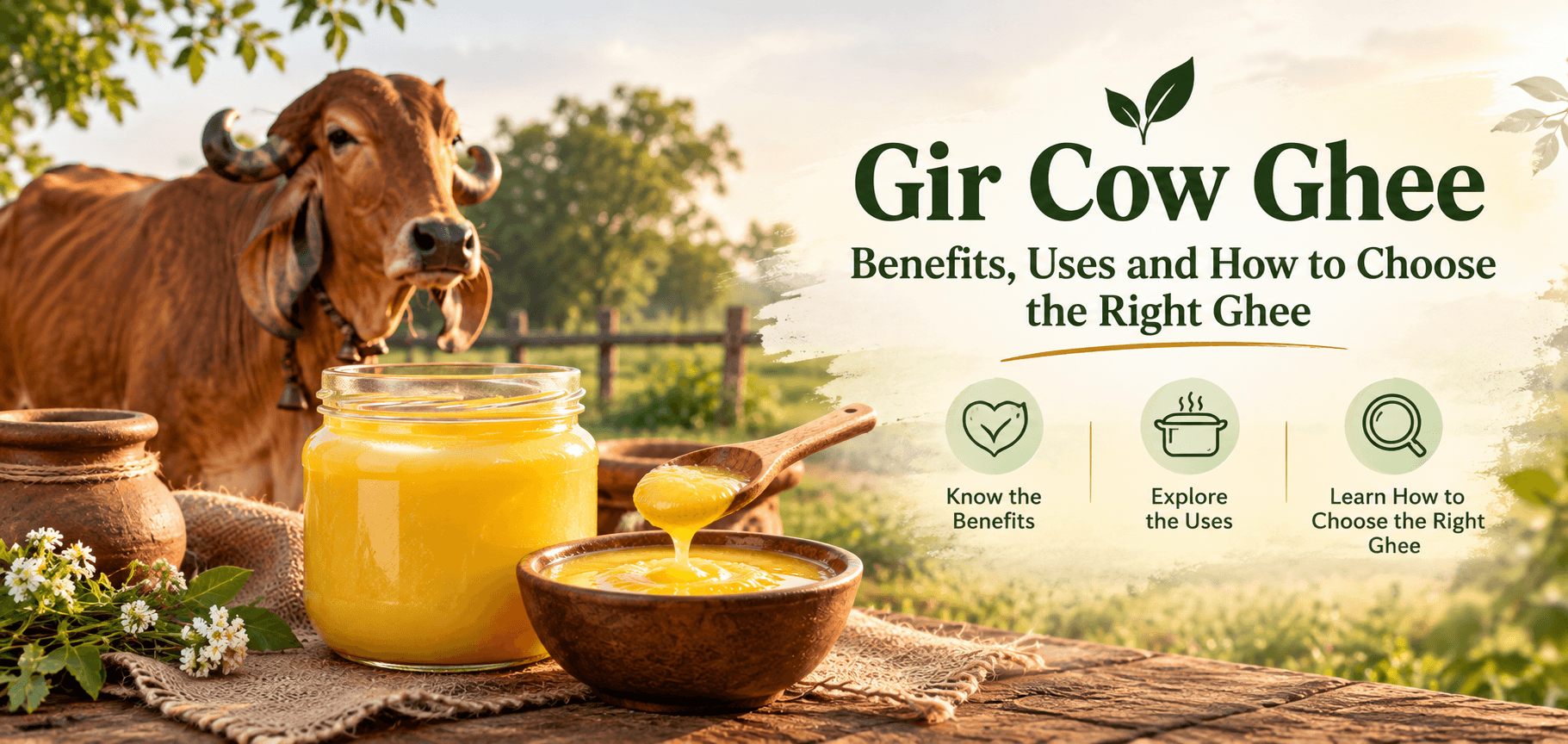
Gir Cow Ghee has been a valued part of traditional Indian kitchens for generations. Known for its rich aroma, distinctive taste and traditional preparation methods, Gir Cow Ghee is commonly used in cooking, festive foods and everyday meals.
With many types of ghee available today, understanding how Gir Cow Ghee is made, how it can be used and what to look for when buying it can help you make a more informed choice.
Gir Cow Ghee is ghee traditionally prepared from the milk of Gir cows, an indigenous Indian cattle breed. The milk is converted into curd, which is then traditionally churned to separate the butter. The butter is subsequently heated to prepare ghee.
Depending on the manufacturer, the exact production process can vary. Some products are made using traditional Bilona-style methods, while others use modern dairy-processing techniques.
Gir Cow Ghee is valued primarily for its taste, aroma and versatility in cooking. It also provides dietary fat and fat-soluble vitamins naturally present in dairy fat.
One of the most noticeable characteristics of good-quality Gir Cow Ghee is its pleasant aroma and rich, buttery taste. A small amount can add flavour to dal, vegetables, rice, rotis and traditional Indian recipes.
Ghee can be used in a variety of cooking applications, including sautéing, tempering, roasting and baking. Its distinctive flavour also makes it popular in traditional Indian sweets and festive recipes.
Ghee has been part of Indian culinary traditions for centuries. Gir Cow Ghee continues this tradition by using milk from an indigenous Indian cattle breed.
Like other ghee and butter products, Gir Cow Ghee is calorie-dense and primarily consists of fat. It can be included as part of a balanced diet when consumed in appropriate quantities.
From spreading on warm rotis to adding a finishing touch to khichdi, dal or rice, Gir Cow Ghee can be incorporated into many everyday dishes.
Gir Cow Ghee can be used in both traditional and modern recipes.
Use ghee for tadka in dal, vegetables, khichdi and other Indian dishes to add a rich flavour and aroma.
Ghee is commonly used in recipes such as halwa, ladoos, barfi and other traditional sweets.
A small amount of ghee can be added to freshly prepared roti or paratha for additional flavour.
Adding a spoonful of ghee to rice or khichdi is a simple traditional way to enhance taste.
Ghee can also be used in selected baking recipes as an alternative to butter or other cooking fats, depending on the recipe.
The primary difference is the breed of cow from which the milk is obtained. Gir Cow Ghee is made from milk sourced from Gir cows, whereas regular cow ghee may be produced from milk obtained from different cow breeds.
The taste, aroma, colour and texture can also vary depending on the breed, feed, processing method and storage conditions.
It is important to check the product label and manufacturer's information rather than relying only on colour or appearance to determine quality.
The Bilona method is a traditional approach to making ghee. In this process, milk is first converted into curd. The curd is then traditionally churned to obtain butter, which is subsequently heated to produce ghee.
Because production methods can differ between brands, consumers should check the manufacturer's product information to understand exactly how a particular ghee has been prepared.
When buying Gir Cow Ghee, consider the following factors:
Look for a clear ingredient list. Ideally, the product should clearly state what it contains and the source of the milk.
If you specifically want Gir Cow Ghee, look for clear information about the milk being sourced from Gir cows.
If traditional Bilona or other specific preparation methods are important to you, check whether the brand clearly explains its manufacturing process.
Choose properly sealed packaging and follow the manufacturer's storage instructions after opening.
Look for appropriate food-business and regulatory information on the packaging, including the manufacturer's details and applicable food licence information.
Ghee can naturally vary in colour depending on factors such as milk, feed, season and processing. Colour alone is not a reliable way to determine whether ghee is pure or high quality.
Store ghee according to the manufacturer's instructions. Always use a clean, dry spoon when taking ghee from the container and keep the jar properly closed.
Avoid introducing water or food particles into the container, as these can affect the product's quality and shelf life.
Ghee is a concentrated source of dietary fat and calories, so portion size matters. The appropriate amount can vary depending on an individual's overall diet, energy needs and health requirements.
Rather than treating ghee as a medicinal product, it is best enjoyed as part of a varied and balanced diet.
Yes. Gir Cow Ghee specifically refers to ghee made from milk sourced from Gir cows. Regular cow ghee can come from different cow breeds.
Bilona Gir Cow Ghee generally refers to ghee prepared using a traditional process in which milk is converted to curd, the curd is churned to obtain butter, and the butter is heated to make ghee.
Yes. Ghee is widely used for cooking, tempering, roasting, baking and preparing traditional Indian dishes.
Follow the storage instructions provided by the manufacturer. Keep the container properly closed and use a clean, dry spoon.
Check the ingredients, milk source, manufacturing information, packaging, food-safety details and the manufacturer's claims. Avoid judging quality based solely on colour or aroma.
Gir Cow Ghee combines a traditional Indian food with the rich flavour and versatility that make ghee a popular kitchen ingredient. Whether you use it for cooking, traditional recipes, sweets or everyday meals, choosing a product with transparent sourcing, clear ingredients and reliable manufacturing information is important.
When selecting Gir Cow Ghee, focus on the milk source, ingredients, production method, packaging and food-safety information rather than relying only on marketing claims.
A good-quality Gir Cow Ghee can be a flavorful addition to a balanced and varied diet while continuing the long-standing culinary tradition of ghee in Indian households.


